




As websites became more interactive, however, developers began to encounter the limitations of traditional HTML. Simple tasks such as updating a piece of information without refreshing an entire page, loading content dynamically, or providing real-time feedback often required large amounts of JavaScript. To meet these demands, modern frameworks such as React, Angular, and Vue emerged, allowing developers to build rich and highly interactive user experiences. These frameworks transformed web development, but they also introduced new layers of complexity, requiring developers to learn extensive toolchains, manage build processes, and maintain increasingly large codebases.
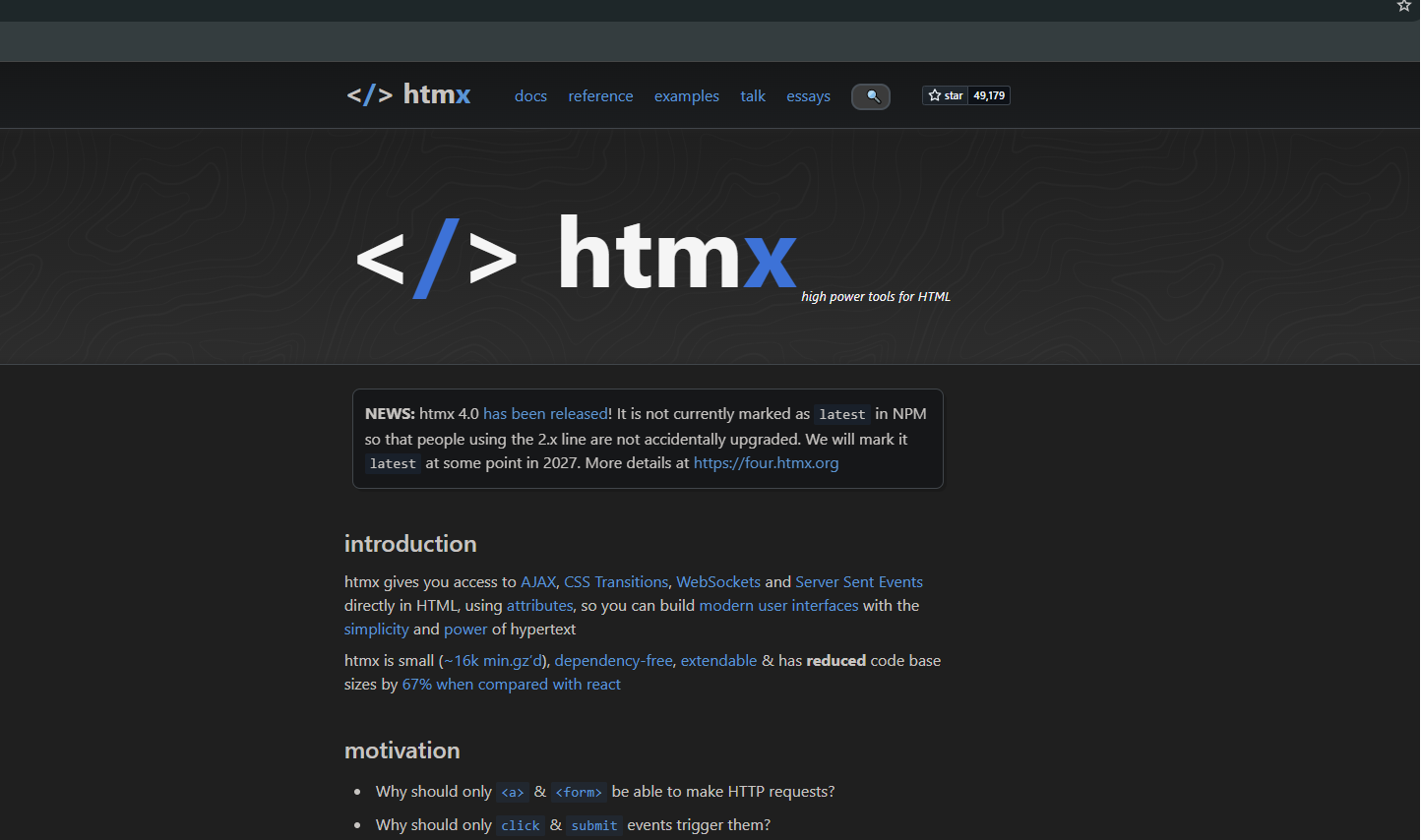
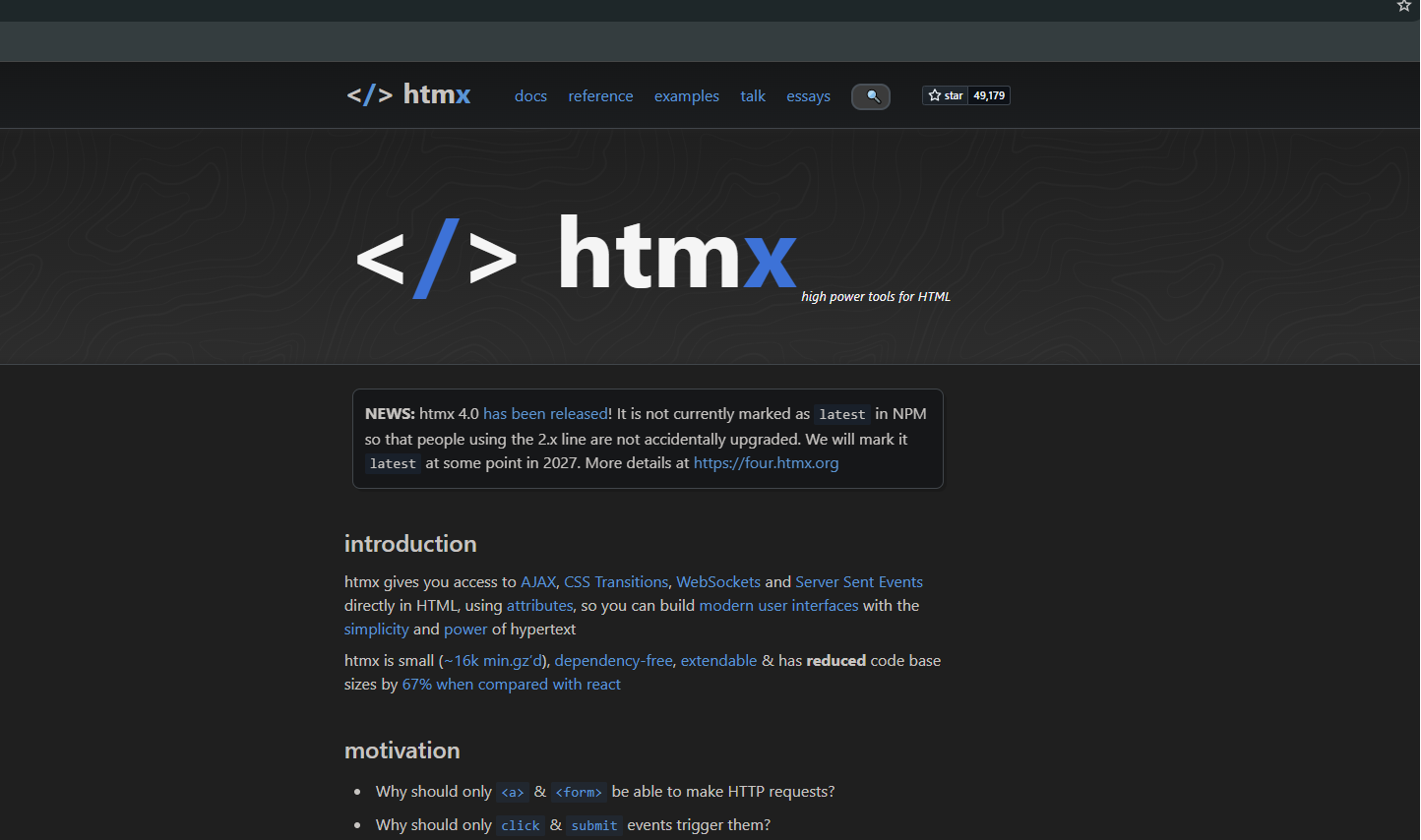
Recently, a new technology has sparked a lively discussion within the web development community. Its name is HTMX, and although it is not an official web standard, many developers jokingly refer to it as "HTML 6" or "the HTML version we never got."
But what exactly is HTMX, and why is it generating so much excitement?
HTMX is a lightweight open-source JavaScript library created by Carson Gross and Big Sky Software. Unlike large frontend frameworks that often require extensive configuration and development environments, HTMX focuses on a simple idea: extending the power of HTML itself. Instead of forcing developers to write JavaScript for common interactions, HTMX allows these interactions to be described directly through HTML attributes.
This approach changes how developers think about building modern web applications. Traditionally, if a button needed to fetch data from a server, a developer would write JavaScript event handlers, perform AJAX or fetch requests, process responses, update the Document Object Model (DOM), and manage application state. HTMX dramatically simplifies this workflow by allowing a button, a div, or almost any HTML element to communicate directly with the server and update specific sections of a page.
Example :- https://htmx.org/examples/click-to-edit/
In essence, HTMX gives HTML new abilities without requiring developers to abandon the technologies they already know.
One of the reasons HTMX attracts so much attention is its commitment to simplicity. Over the past decade, web development has increasingly moved toward complex client-side applications where the browser is responsible for assembling the user interface from data returned by APIs. HTMX takes a different route. Instead of sending raw data and relying heavily on JavaScript to build the interface, it encourages servers to return ready-to-use HTML fragments that can be inserted directly into the page.
This model is often referred to as a Hypermedia Driven Application. The browser requests content, the server sends HTML, and HTMX updates only the portions of the page that need to change. The result is a faster development experience, less client-side code, and applications that are often easier to maintain.
For educational institutions, small businesses, startups, and organizations building internal tools, this philosophy can be particularly appealing. Not every project requires the complexity of a full-scale JavaScript framework. Many applications simply need forms, dashboards, data tables, user management features, and content updates. In these scenarios, HTMX can provide many of the interactive capabilities users expect while keeping the development process straightforward and more accessible.
This does not mean HTMX is a replacement for React, Angular, or Vue. Large-scale applications with sophisticated client-side requirements will still benefit from dedicated frontend frameworks. However, HTMX offers an alternative path for developers who want to build powerful, responsive applications without the overhead associated with modern frontend ecosystems.
What makes HTMX especially interesting is that its popularity reflects a broader trend within the software industry. After years of pursuing increasingly complex architectures, many developers are rediscovering the value of simplicity. The conversation is no longer focused solely on adding more tools and technologies. Instead, developers are asking whether existing technologies can be used more effectively.
HTMX embodies this perspective perfectly. Rather than creating an entirely new framework or replacing HTML, it enhances familiar web technologies and encourages developers to leverage the strengths of the web's original design.
So, is HTMX really HTML 6?
Officially, the answer is no. The current web standard remains HTML5, and HTMX is simply a library that runs on top of existing web technologies. Yet the nickname persists because HTMX expands HTML in ways many developers wish had been built into the language from the beginning.
Whether HTMX becomes a mainstream development approach or remains a niche tool, its impact is already visible. It has reignited discussions about how web applications should be built and challenged the assumption that every project requires a large JavaScript framework.
Perhaps the most important lesson HTMX offers is that innovation does not always mean adding more complexity. Sometimes, the most powerful ideas come from making familiar tools work better.
As developers continue to explore new possibilities for the future of the web, HTMX serves as a reminder that even after more than three decades, HTML still has room to evolve.
Published by Horizon International Academy - Exploring technology, innovation, and the future of digital learning. 🚀
📸 Gallery